NEWS
High mountain
Transatlantic Trade Shifts: Deep Interpretation of the US-EU Temporary Agreement on Eliminating Industrial Tariffs and Its Long-Term Supply Chain Impact
Time: 2026-05-25
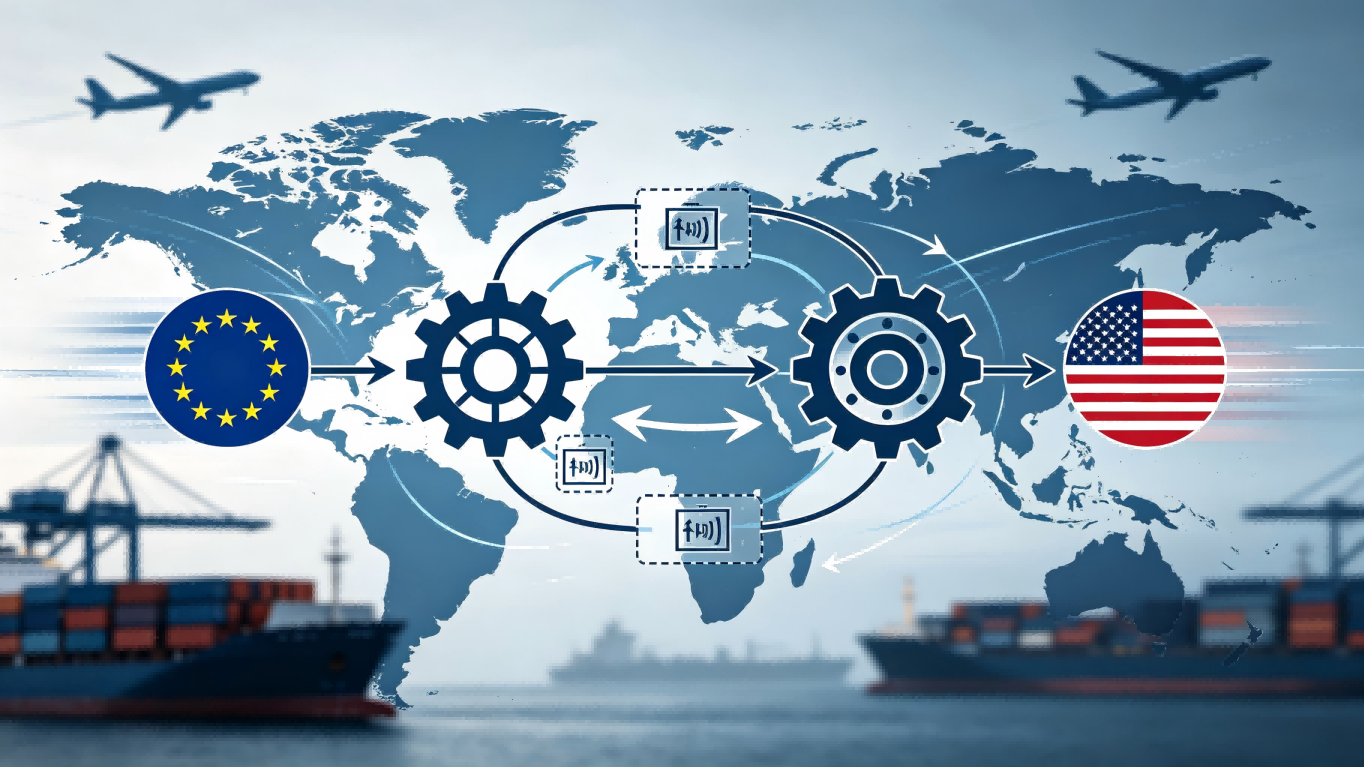
On May 20, 2026, local time, representatives from the European Parliament, the Council of the EU, and the European Commission reached a major temporary agreement to implement the US-EU trade framework agreement after more than five hours of intense trilogue negotiations. According to the established procedure, the agreement is expected to be voted on and passed by the European Parliament in mid-June and formally take effect before the end of June, arriving just ahead of the July 4 "deadline" set by the United States.
This development is far more than a localized adjustment of bilateral tariffs; it represents a major realignment of the global macroeconomic and geopolitical trade landscape.
The essence of this agreement is a complex transatlantic balancing act. The European Union is yielding a portion of its vast consumer market and economic benefits in an attempt to secure strategic breathing room for multilateral economic relations. Meanwhile, the United States has successfully carved out a green channel for its industrial and agricultural products to enter the European market by establishing a cap on comprehensive tariffs.
In the industrial goods sector, the EU has committed to completely eliminating import tariffs on all US industrial products. The affected categories extensively cover machinery and equipment, high-precision tools, basic chemicals, and industrial raw materials. This legally dismantles both digital and physical barriers for US industrial products entering the EU market. In the agri-food sector, the EU will relax preferential tariff quotas or grant tariff reductions for US nuts, dairy products, fresh and processed fruits and vegetables, pork, and seafood, while extending and expanding tariff relief for lobsters, including processed lobster products. Notably, all of these tariff concessions come with a clear expiration date, uniformly set to terminate on December 31, 2029.
In exchange, the United States has pledged to implement a 15% cap on comprehensive tariffs for the vast majority of EU goods exported to the US (meaning the sum of the Most Favored Nation (MFN) base tariff and reciprocal tariffs will not exceed 15%), promising not to indefinitely stack higher punitive rates. Concurrently, EU exports to the US in critical sectors such as softwood, aircraft and components, and generic drugs and their ingredients will only be subject to the standard MFN base rates, with no additional tariffs applied. Furthermore, the agreement incorporates a reverse constraint mechanism: if the US continues to levy tariffs exceeding 15% on EU steel, aluminum, and their derivatives by the end of 2026, the EU retains the right to unilaterally suspend a portion of its tariff concessions to the US.
Due to deep-seated distrust within Europe regarding the subsequent enforcement and continuity of these tariff promises, the agreement underwent nearly a year of rigorous internal scrutiny. To hedge against the risks of cutting tariffs upfront unilaterally, the EU successfully embedded three robust safeguard mechanisms into the final text:
Import Surge Safeguard: If zero-tariff imports from the US surge drastically in the short term and inflict substantial shocks on local EU industrial sectors or agriculture, the EU can immediately initiate an investigation and unilaterally suspend the tariff concessions.
Four-Year Sunset Clause: The tariff concessions granted to the US will automatically expire on December 31, 2029, and must undergo a complete legislative re-evaluation to be extended. This provides Europe with a defined time window for strategic recalibration.
Breach Countermeasure Prerogative: Should the US violate its 15% tariff cap commitment or impose non-tariff barriers in the future, the EU maintains the right to fully or partially suspend the agreement, ensuring it holds the upper hand in bilateral disputes.
The implementation of the new US-EU trade rules will reshape global cross-border trade flows over the coming years, creating profound ripple effects for multinational enterprises and supply chain ecosystems.
With the EU implementing zero tariffs across the board on US industrial products, chemicals, and raw materials, US-manufactured industrial inputs will flood into Europe at highly competitive prices. In the short term, this will directly drive down raw material procurement costs for European manufacturers. However, it will simultaneously exert tremendous competitive pressure on local European intermediate manufacturers and basic chemical enterprises. The fluidity of machinery, high-precision equipment, and bulk commodities between the US and Europe will pick up significantly.
Because a 15% comprehensive tariff ceiling and a zero-tariff status for industrial goods have been established between the US and Europe, the stability of the transatlantic trade corridor will see a substantial short-term boost. This is highly likely to cause a structural redirection of certain procurement orders away from third-party markets like Asia and Latin America, pulling them back into the US-EU internal sphere. As multinational corporations re-evaluate logistics costs, tariff exposures, and compliance risks, many may leverage the transatlantic route as a medium-term safe haven, triggering a structural shift in global commodity and industrial trade flows.
The 2029 sunset clause embedded in the agreement is a double-edged sword. While it provides enterprises with a relatively stable tariff window for the next four years, it also functions as an institutional time bomb ticking within the legal text. Less than four years from now, both superpowers will inevitably return to the negotiating table, meaning the current period of stability is merely a timed intermission. For corporations mapping out long-term global strategies, the 2029 policy cliff means that asset allocation, facility construction, and long-term supply contracts must be rigorously hedged against risk well in advance.
Although the temporary agreement has been finalized, its subsequent execution efficiency remains subject to variables. Conflicting internal interests within Europe are prominent: traditional agricultural nations in Southern Europe harbor deep anxieties that an influx of cheap US agricultural products will decimate local ecosystems, and they may create procedural hurdles during the upcoming votes and implementation phases. Meanwhile, Eastern European nations remain laser-focused on energy and geopolitical security. Concurrently, the rotation of international political cycles leaves a lingering question mark over whether the US will strictly enforce the 15% tariff cap across its customs systems and lower its steel and aluminum tariffs as scheduled.

Mobile version


HOME | ABOUT US | PRODUCTS | NEWS | HONORS | FACTORY | CONTACT | 中文版
Copyright(C)2025, Wuxi High Mountain Hi-tech Development Co., Ltd. All Rights Reserved. Supported by Sunsirs ChemNet Toocle Copyright Notice 备案序号:苏ICP备2025195488号