NEWS
High mountain
May Domestic PVC Paste Resin Market Wide-Range Correction: Supply-Demand Mismatch Intensifies, Dual-Weak Pattern Projected for June
Time: 2026-05-29
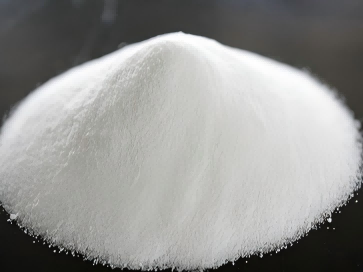
Shifting trends and supply-demand imbalances within bulk chemical raw materials directly influence procurement budgets for manufacturing enterprises and the operational resilience of global supply chains. Since May, the domestic polyvinyl chloride (PVC) paste resin market has experienced downward corrections, as structural oversupply has yet to see fundamental relief.
To assist global partners and downstream manufacturing enterprises in grasping market pulses proactively, Wuxi High Mountain Hi-tech Development Co., Ltd. delivers a comprehensive assessment of the domestic PVC paste resin industry based on market fundamentals from May (May 1, 2026 – May 25, 2026), dissecting price trajectories, cost pass-throughs, supply-demand dynamics, and the upcoming outlook.
Throughout the first three weeks of May, the domestic PVC paste resin market exhibited persistent sluggishness. Surrounded by several bearish factors, the spot transaction center moved continuously downward. Market participants largely adopted flexible shipping strategies such as formula-based pricing or order-specific negotiations (one order, one discussion). To alleviate phase-specific inventory accumulation pressures, certain production enterprises initiated concessionary selling; however, downstream buy-side purchasing remained restricted to rigid, hand-to-mouth baselines, making it difficult to book high-priced spot volumes.
According to industry tracking data, the monthly average prices for the two primary product variants saw significant step-by-step pullbacks:
Glove Grade Resin Market: In May, the domestic monthly average price for glove grade resin fell to 6,791 RMB/ton, representing a notable drop of 854 RMB/ton (a monthly decline of 11.17%) compared to the average of 7,645 RMB/ton recorded during the same period last month.
Leather Grade Resin Market: The monthly average price for leather grade resin adjusted to 6,590 RMB/ton, down 937 RMB/ton (a monthly decline of 12.45%) from the previous month's baseline of 7,527 RMB/ton.
In May, due to variance in primary feedstock performance, merchant-fed and self-contained paste resin enterprises showed a clear divide in profit margins and operational loads:
Ethylene & VCM Route: International and domestic ethylene benchmarks trended downward in succession this month. Dragged down by persistently quiet demand, the ex-factory vinyl chloride monomer (VCM) cash-pledge price in East China weakened further, logging a cumulative decline of 300 RMB/ton in May. By late May, mainstream ex-factory offers hovered around 5,300 RMB/ton. While this somewhat eased the financial burden for ethylene-based paste resin plants relying on merchant monomers, absolute costs remained elevated, keeping these facilities in a deficit state and suppressing full capacity utilization.
Calcium Carbide Route: In contrast to the steady decline of VCM, domestic calcium carbide prices chalked up minor gains in May. Calcium carbide-based PVC paste resin enterprises experienced slight increases in manufacturing cost injections, but overall cost pressures remained within manageable parameters, allowing reasonable profitability to persist.
From a supply perspective, following the drop in certain raw material inputs and the completion of scheduled turnaround cycles, domestic paste resin facilities that had previously scaled down operations progressively returned to standard runs. Apart from isolated short-term shutdowns or unplanned mechanical hitches at individual plants, major industry facilities operated smoothly, driving the overall industry operation rate upward in May.
The domestic PVC paste resin industry's average operating load for May is estimated to have rebounded to around 68.62%.
Total monthly output is projected at approximately 101,500 tons, ensuring that ample spot inventory reserves left the market entirely free of near-term supply pressures.
The persistent erosion of demand functioned as the primary driver behind the market slide in May:
Export Frontiers: Downstream processing factories reported sluggish new order intake for finished goods exports in May, facing a temporary deceleration in overseas market expansion. The export channel consequently failed to provide adequate pull-through support for the upstream resin market.
Domestic End-Users: Domestic conversion sectors, including footwear, synthetic leather, and glove manufacturing, maintained low operating rates. The onward transmission of finished inventory encountered bottlenecks, suppressing purchasing appetite for plasticizers and paste resin. Buyers exhibited a clear pushback against high-priced spot offers, limiting activities to essential, rigid-demand sourcing.
Due to regional supply-demand nuances and varying freight proportions in spot transactions, actual tax-inclusive, delivered average spot prices across major domestic distribution hubs by May 25 exhibited distinct regional variations (provided for industry reference due to order-specific variations):
For Glove Grade Resin, the tax-inclusive delivered average price hovered around 7,000 RMB/ton in East China, around 7,025 RMB/ton in South China, and near 6,775 RMB/ton in North China.
For Leather Grade Resin, the tax-inclusive delivered average price sat around 6,700 RMB/ton in East China, near 6,750 RMB/ton in South China, and around 6,650 RMB/ton in North China.
Looking ahead to June, the domestic PVC paste resin market is expected to gradually step into a deep tug-of-war characterized by a "dual-weak" supply and demand pattern. In the absence of substantial bullish drivers, market participants will shift their focus from pure supply-side pressures to the counterbalancing forces of softening input costs and scheduled turnarounds.
According to the latest industry maintenance schedules, several localized PVC paste resin units in core producing regions across East and Central China have explicitly mapped out overhauls or load pullbacks for June. Consequently, total industry output will see a phase-specific contraction, dragging the average industry operating rate downward, which should offer partial insulation against current warehouse accumulation pressures.
Calcium Carbide: The domestic calcium carbide market is projected to trend on the softer side next month, potentially driving down the theoretical manufacturing costs for carbide-based paste resin plants.
VCM Feedstock: Vinyl chloride monomer prices are expected to slide downward as well, which will further dilute cost-end pressure for ethylene-based paste resin entities. Broadly speaking, feedstock cost defenses for resin spot pricing will loosen in June.
On the downstream converter front, current prices for non-mainstream auxiliary materials and plasticizers remain highly supported, keeping consolidated manufacturing costs elevated for conversion factories. Because the onward clearing of finished goods continues to face resistance, overall operating loads at downstream converter plants are unlikely to see sharp turnarounds in the near term, keeping the demand end weak throughout June.
In summary, while orderly maintenance turnarounds across select domestic regions in June can partially offset spot supply pressures, the demand end has yet to flash clear recovery signals, leaving insufficient backing to lift the pricing sentiment of resin manufacturers.
Under the unfolding logic of a dual-weak market, the mainstream transaction center for domestic PVC paste resin is projected to edge lower in June, with an anticipated price contraction range of 300–500 RMB/ton.

Mobile version


HOME | ABOUT US | PRODUCTS | NEWS | HONORS | FACTORY | CONTACT | 中文版
Copyright(C)2025, Wuxi High Mountain Hi-tech Development Co., Ltd. All Rights Reserved. Supported by Sunsirs ChemNet Toocle Copyright Notice 备案序号:苏ICP备2025195488号