NEWS
High mountain
Unlocking the Multi-Faceted "Chemical Core": A Comprehensive Guide to Chloroacetic Acid (MCA)
Time: 2026-06-08
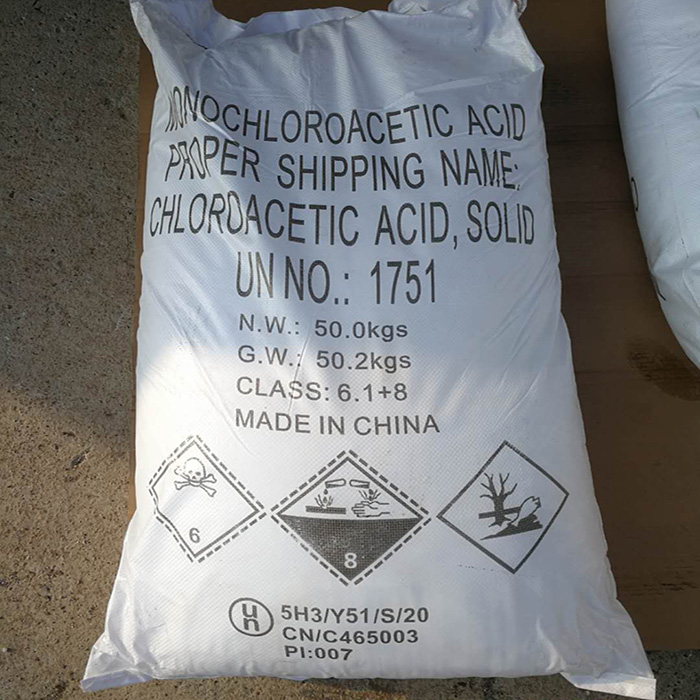
In the vast landscape of the modern chemical industry, certain foundational raw materials rarely appear on the front lines of consumer products, yet they act like essential interlocking blocks, connecting countless scenarios in our daily clothing, food, housing, and transportation. Chloroacetic Acid (also known as Monachloroacetic Acid, or MCA) is precisely such a basic fine chemical material, combining high practical value with unique chemical reactivity.
As a seemingly straightforward carboxylic acid derivative, what secrets does it hold? How does it play a pivotal role across various industries? This article provides an objective and comprehensive overview of Chloroacetic Acid.
In terms of chemical structure, Chloroacetic Acid can be understood as a product where one hydrogen atom on the methyl group of ordinary acetic acid (the main component of vinegar) is replaced by a chlorine atom. It is precisely this single substitution that imparts a chemical vitality far exceeding that of standard acetic acid.
Appearance and State: At room temperature, pure Chloroacetic Acid is a colorless or white crystalline powder, sometimes appearing in flaky or granular forms. It possesses a pungent odor similar to acetic acid.
High Solubility: It is highly soluble in water and readily dissolves in most organic solvents, including ethanol, diethyl ether, benzene, and chloroform.
Strong Acidity and Corrosiveness: Due to the strong electron-withdrawing effect of the chlorine atom, the acidity of Chloroacetic Acid is significantly stronger than that of ordinary acetic acid. It is highly corrosive and causes noticeable irritation and thermal-like burns upon skin contact, requiring high-specification protection during industrial production and storage.
Currently, the global chemical industry primarily utilizes two mainstream processing routes to produce Chloroacetic Acid, both reflecting modern chemical engineering's pursuit of efficiency and purity:
Acetic Acid Catalytic Chlorination (The Mainstream Process): This is the most widely adopted industrial method. Using glacial acetic acid as the primary raw material, chlorine gas is introduced into the reaction under the presence of a catalyst (such as sulfur, red phosphorus, or acetic anhydride). While this process offers excellent cost control, the resulting mixture contains minor by-products like dichloroacetic acid or trichloroacetic acid, which require advanced crystallization or rectification techniques to separate and yield high-purity industrial or pharmaceutical grade products.
Trichloroethylene Hydrolysis: This route utilizes trichloroethylene as the feedstock, undergoing a hydrolysis reaction catalyzed by sulfuric acid. Chloroacetic Acid produced via this method achieves exceptional purity, meeting advanced application standards directly, though it depends on specific raw material availability and cost structures.
The reason Chloroacetic Acid is widely designated as a "golden intermediate" in fine chemicals rests on the high reactivity of both its carboxylic acid group and its chlorine atom. It participates efficiently in nucleophilic substitution, esterification, and salt-formation reactions, extending into a vast downstream product chain:
One of the largest downstream sectors for Chloroacetic Acid is the production of Carboxymethyl Cellulose (CMC). Known colloquially as "industrial gourmet powder," CMC is highly valued for its thickening, binding, suspending, and water-retaining properties. It is widely used in:
The Food Industry: Acting as a stabilizer and thickener in yogurt, ice cream, jams, and jellies.
Personal Care Products: Serving as a binder and homogenizing agent in toothpaste and shampoos.
Oil Drilling: Functioning as a water-retaining and fluid-loss additive in drilling muds during petroleum extraction.
In the agricultural chemical sector, Chloroacetic Acid serves as a core building block for synthesizing various highly effective, low-toxicity pesticides and herbicides. For instance, well-known weed control agents (including certain manufacturing routes for glyphosate, 2,4-D, and MCPA) as well as specific insecticides rely heavily on precursors provided by Chloroacetic Acid.
In the pharmaceutical sector, Chloroacetic Acid is utilized to synthesize dozens of essential medications. The molecular synthesis chains of common vitamins (such as Vitamin B6), non-steroidal anti-inflammatory drugs (like ibuprofen and diclofenac sodium), sedatives, and amino acids all rely on Chloroacetic Acid as a critical fragment provider.
Through its derivative, Sodium Chloroacetate, it is utilized to manufacture amphoteric surfactants, such as the betaine series. These surfactants are exceptionally mild, making them core ingredients in high-end baby shampoos, tearless washes, and gentle facial cleansers. Furthermore, in the textile industry, it serves as a substrate for synthesizing vat dyes, including indigo.
As with many highly efficient chemical agents, high reactivity comes with specific handling hazards. Chloroacetic Acid is classified as a highly toxic and strongly corrosive chemical. Inhalation of its vapors or direct skin contact presents significant health risks.
Packaging Specifications: Industrial solid products are typically packed in woven bags or fiber drums lined with plastic bags. Liquid forms must be transported in specialized stainless steel or plastic-lined tank trucks with high acid resistance.
Environmental Control: Storage warehouses must remain cool, dry, and well-ventilated, kept strictly away from fire, heat sources, oxidizers, and alkaline materials.
Operational Protection: Operators are required to wear specialized respiratory protection, acid-and-alkali-resistant rubber suits, and protective gloves to eliminate any potential exposure from leaks or spills.
From a fundamental reaction concept to supporting multiple multi-billion-dollar industries—including food, pharmaceuticals, agriculture, and new materials—Chloroacetic Acid demonstrates the immense capability of fine chemical intermediates. Driven by green chemistry initiatives and ongoing engineering updates, the production and utilization of high-purity Chloroacetic Acid will continue to grow safer and more efficient, quietly structuring the material foundations of modern life.

Mobile version


HOME | ABOUT US | PRODUCTS | NEWS | HONORS | FACTORY | CONTACT | 中文版
Copyright(C)2025, Wuxi High Mountain Hi-tech Development Co., Ltd. All Rights Reserved. Supported by Sunsirs ChemNet Toocle Copyright Notice 备案序号:苏ICP备2025195488号