NEWS
High mountain
Industry Pain Points: Who is Spiraling Downwards, and Who is Profitably Navigating the Shift?
Time: 2026-07-13
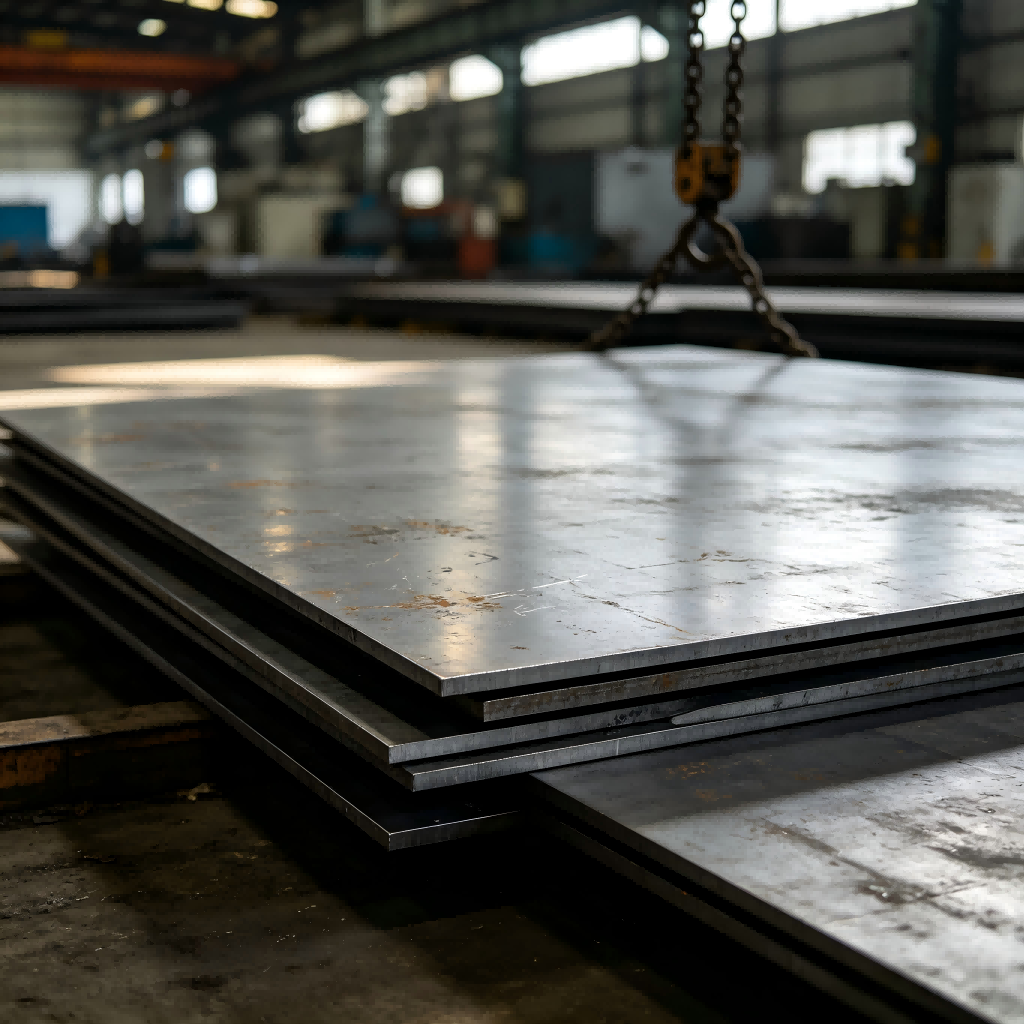
Since the beginning of 2026, the domestic steel industry has encountered a severe and rare winter. According to recent industry statistics, profits for the steel businesses of key steel enterprises dropped by 85.6% year-on-year in the first quarter of 2026. At the same time, the steel price index has fallen to its lowest point for the same period in recent years, leaving the distribution sector plagued by fierce "price wars," below-cost dumping, and malicious order grabbing.
In response to this rampant "involutionary" vicious competition, the Distribution Branch of the China Iron and Steel Association (CISA), together with more than 40 provincial and municipal trade associations nationwide, joint-released the Initiative for Anti-Involution Action in the Steel Distribution Industry. This marks the first large-scale joint action within the steel distribution sector, signalling that the old survival model of "competing on price and volume" has completely hit a dead end.
Amid an export landscape where everyone claims times are tough, a profound structural shift is quietly splitting the steel foreign trade sector: one segment is bleeding money in the quagmire of blind price-cutting, while another has quietly stepped away from the involution to secure stable, sustainable profits.
Those trapped in losses or facing survival crises are largely clinging to old experiences from five years ago. Their predicaments stem primarily from being squeezed across three market dimensions:
The Gap Between Strong Supply and Weak Demand: In 2025, China's crude steel output stood at 961 million tons (down 4.4% year-on-year), while apparent consumption dropped even faster to 829 million tons (down 7.1% year-on-year). The fact that demand is shrinking faster than supply capacity has doubled the surplus pressure on traditional general steel materials both domestically and abroad.
The Paradox of "Volume Up, Prices and Profits Down": Although steel exports reached 119 million tons in 2025 (a year-on-year increase of 7.5%), the average export price dropped by 8.1%. By the first quarter of 2026, many traders found themselves trapped in a cycle of high overseas activity with zero to negative actual returns, culminating in the 85.6% plunge in key steel mill profits.
Severe Overcrowding in Traditional Routes: Mature Western markets are heavily saturated and wrapped in dense trade barriers and strict compliance investigations. Exporters who still rely on blind overseas order grabbing for ordinary steel products like hot-rolled plates, rebar, and general profiles—relying only on intuition, customer price-squeezing, or rumors—lose all pricing leverage and face massive risks of trade remedy investigations, cargo seizures, or penalties.
Conversely, enterprises that continue to maintain solid profitability in 2026 have succeeded not because industry dividends have completely vanished, but because they have precisely pivoted toward three overlooked blue-ocean segments:
While mature Western markets are hyper-congested, emerging regions such as ASEAN, the Middle East, Latin America, and Africa are entering a boom phase in urbanization, new energy infrastructure, and water conservancy projects. These regions face substantial rigid-demand deficits due to insufficient local steel capacity, and fewer global players have effectively established themselves there. Profitable companies no longer try to use a single product line to feed the entire globe; instead, they deeply localize their offerings to meet the specific certification standards and pricing structures of different emerging nations.
While profit margins for bulk general steel have bottomed out, demand continues to rise for high-value-added specialties—such as special section steels, matching pipes, prefabricated steel structures, and coated steel plates tailored for photovoltaics, energy storage, prefabricated buildings, and construction machinery. These niche categories feature higher technical thresholds, bypassing the blind bloodshed of mainstream commodities and yielding far superior gross margins.
Successful enterprises are accelerating up the value chain, transforming from "one-off transactional traders" into "full-lifecycle service providers". By building differentiated capabilities across processing, warehousing, logistics, and supply chain finance, they provide the comprehensive support necessary to secure long-term, stable orders from premium overseas buyers.
Reviewing the core pillars of the Initiative for Anti-Involution Action, from "participating rationally in international competition" to "embracing digital and intelligent transformation," everything ultimately points to a single core competency: the mastery of foreign trade big data and precise information capabilities.
The root cause of low-price involution is an outdated reliance on information gaps. Premium enterprises manage to hold their pricing baselines and steer clear of hyper-congested markets precisely because they substitute data for guesswork and drive decisions with deep market insights. Before setting sail, they leverage digital tools to verify actual overseas transaction prices, map out competitor shipments, and anticipate trade risks, such as the EU's Carbon Border Adjustment Mechanism (CBAM) or localized anti-dumping reviews.
For steel exports in 2026, the core competitive variable has fundamentally changed: the market no longer rewards those who dare to quote the lowest prices or take the blindest risks, but rather those who see international trends with the absolute highest clarity.
While a cap on total industry volume is an established reality, structural blue oceans remain vibrant. Rather than engaging in bloody price wars in fading channels, the path forward lies in utilizing accurate data insights and innovative supply chain services to forge new roads. Though transformation is challenging, it remains the only viable path to steer away from involutionary survival toward a future defined by value, green metrics, and true innovation.

Mobile version


HOME | ABOUT US | PRODUCTS | NEWS | HONORS | FACTORY | CONTACT | 中文版
Copyright(C)2025, Wuxi High Mountain Hi-tech Development Co., Ltd. All Rights Reserved. Supported by Sunsirs ChemNet Toocle Copyright Notice 备案序号:苏ICP备2025195488号