NEWS
High mountain
Global Ethylene Industry Faces Impending 15-Million-Ton Supply Deficit as Closure Timeline Shrinks to 1.5–2 Years
Time: 2026-08-17
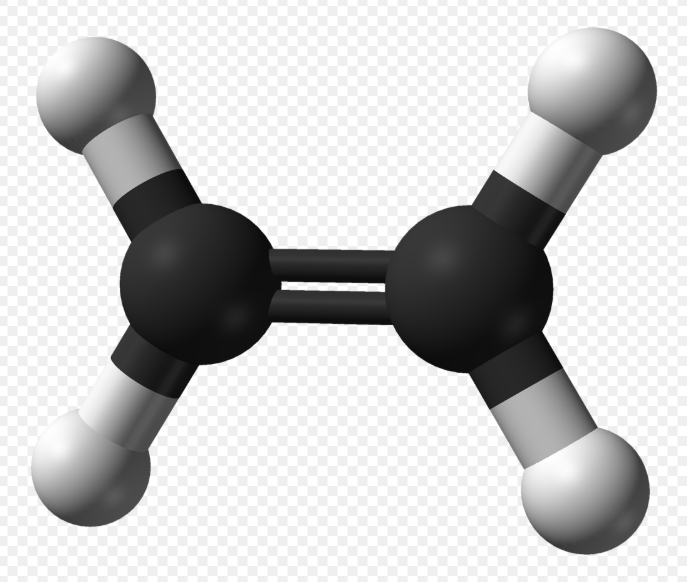
The global ethylene industry is undergoing a major structural transformation. Driven by long-term industrial realignments and cost-side pressures, the decommissioning of large-scale refining and petrochemical facilities in traditional producing regions—including Europe, South Korea, and Japan—is accelerating significantly. Shutdown plans originally scheduled over a five-year horizon are now compressed into a 1.5- to 2-year timeframe, with the bulk of capacity retirements expected to land between H2 2026 and H1 2027.
Combined estimates indicate that Europe, South Korea, and Japan will suffer a collective loss of nearly 15 million tons of ethylene production capacity.
This wave of overseas capacity rationalization reflects long-term structural planning, with rising crude oil prices and tightening feedstock supplies acting as catalysts.
South Korea: As the region experiencing the sharpest contraction, South Korea will slash nearly 6 million tons from its existing 12.8-million-ton ethylene capacity, representing a 45% reduction. Upon completion, national capacity will decline to just 6.87 million tons. Affected plants are situated across the key petrochemical hubs of Ulsan, Yeosu, and Daesan, covering major operators such as SK, YNCC, LG, Lotte, and Hanwha. Government-led initiatives account for nearly 4 million tons of these closures.
Europe: Total ethylene capacity is projected to fall from approximately 23 million tons in 2025 to just over 17 million tons by 2030—a 25% drop totaling 6 million tons. Concurrent refinery shutdowns are sharply reducing LPG supply, causing a synchronized contraction in the availability of ethylene, propylene, butadiene, and aromatics (benzene, toluene, and xylene).
Japan & Taiwan (China): Japan plans to reduce its ethylene capacity by 30% (its current total capacity is about half of South Korea's), with shutdowns peaking in 2027 and wrapping up by 2028. Meanwhile, select megaton-scale facilities in Taiwan have also been added to the retirement list.
In terms of timing, the exit schedules across Japan and South Korea closely align, with substantial capacity permanently retiring in 2027 and the regional phase-out largely concluding by 2028.
Global ethylene demand has consistently outpaced supply additions. In recent years, annual capacity growth has remained under 0.5%, whereas downstream consumption has expanded at an average rate of 2.5% annually, worsening market tightness.
As overseas market shares shrink, China's proportion of global ethylene capacity continues to rise. China's capacity additions from 2025 to 2030 are projected as follows:
2025: Base capacity stands at 57.8 million tons.
2026: Planned expansion of 6 million tons brings total capacity to 63 million tons; however, project delays mean actual commissioned capacity may fall short of expectations.
2027: Nominal capacity reaches 69 million tons with another 6 million tons added on paper. Because new facilities are concentrated in the second half of the year, effective new capacity is expected to be around 3 million tons.
2028–2030: As legacy project pipelines materialize, 2028 will add approximately 5 million tons (reaching 74 million tons). Additions in 2029 and 2030 are estimated at 2 million tons and 3 million tons respectively, pushing total capacity to 79 million tons, after which new project approvals will drop off significantly.
Although domestic additions are set to exceed 20 million tons over the next decade, the timing of these commissioning cycles does not align with the accelerated 15-million-ton exit overseas. Consequently, domestic effective additions will be insufficient to quickly offset the international supply deficit during the peak retirement window.
Industry analysts note that under the dual pressures of accelerated overseas exits and global supply-demand imbalances, market pricing and profit margins for ethylene and its downstream derivatives (including propylene and aromatics) will gain sustained structural support. As trade flows and profit allocations realign, global chemical supply chains are set for a profound long-term adjustment.

Mobile version


HOME | ABOUT US | PRODUCTS | NEWS | HONORS | FACTORY | CONTACT | 中文版
Copyright(C)2025, Wuxi High Mountain Hi-tech Development Co., Ltd. All Rights Reserved. Supported by Sunsirs ChemNet Toocle Copyright Notice 备案序号:苏ICP备2025195488号