NEWS
High mountain
How to Comprehensive Understand and Safely Apply "Rongalite" (Sodium Formaldehyde Sulfoxylate)?
Time: 2026-08-18
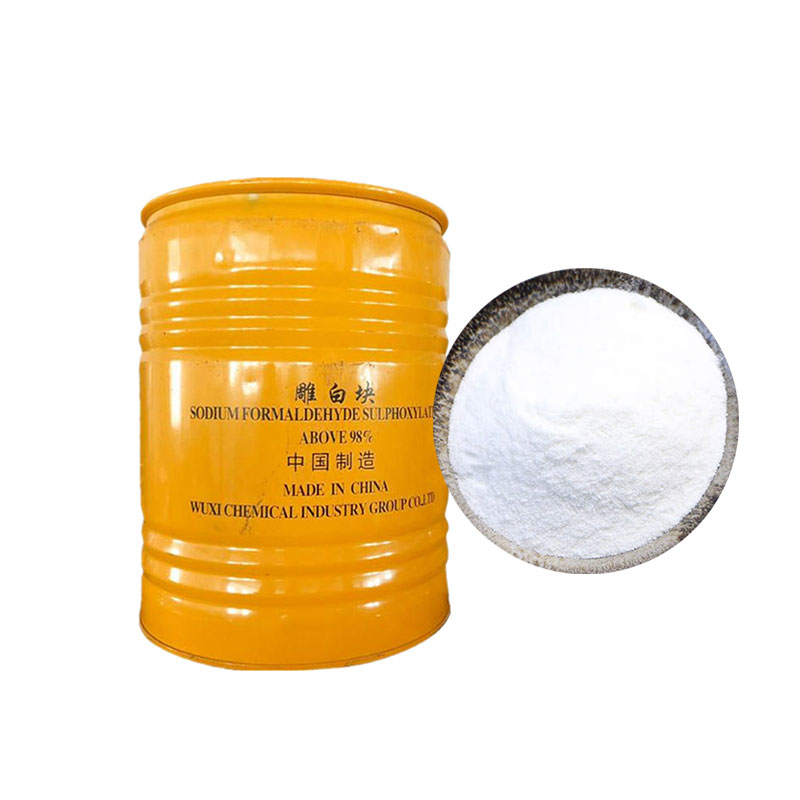
In the fine chemicals and textile dyeing industries, "Rongalite" (chemical name: sodium formaldehyde sulfoxylate) is widely used due to its powerful reducing, color-stripping, and bleaching capabilities.
This FAQ guide provides a comprehensive overview of Rongalite's physical and chemical properties, industrial applications, reaction mechanisms, and safety management standards.
Q1: What is Rongalite? What are its primary physical forms and chemical characteristics?
A: Rongalite (chemical name: sodium formaldehyde sulfoxylate, or NaCH₃O₃S) is a chemical compound commonly sold as white crystalline solids, lumps, or granules.
Q2: What are the main industrial applications of Rongalite?
A: Rongalite serves as an indispensable reducing and bleaching agent across several major industrial sectors:
Textile & Printing:
Synthetic Rubber: Acts as a activator in redox-initiator systems during emulsion polymerization (e.g., styrene-butadiene rubber production).
Industrial Bleaching:
Chemical Synthesis: Functions as a reducing intermediate in pharmaceutical and fine chemical manufacturing.
Q3: How does Rongalite work during the textile discharge printing process?
A: During high-temperature steaming (typically above 100°C) or in acidic media, Rongalite decomposes to release active sulfoxylate species with intense reducing potential. These species cleavage the chromophore structures (such as azo bonds) of dyes fixed on the fabric, transforming them into colorless, water-soluble compounds that can be washed away, leaving clean white or light-colored discharge patterns.
Q4: What safety precautions must be followed during the storage and transport of Rongalite?
A: Classified as a moisture-sensitive chemical with reducing properties, Rongalite requires strict handling protocols:
Protection from Light & Moisture: Store in a cool, dry, well-ventilated warehouse with sealed packaging to prevent moisture absorption, caking, or premature decomposition.
Isolation from Incompatibles: Keep strictly isolated from oxidizing agents, strong acids, and food products. Contact with strong acids triggers rapid decomposition, releasing toxic fumes.
Heat and Fire Avoidance: Keep away from direct sunlight, open flames, and heat sources, as elevated temperatures can accelerate thermal decomposition.
Q5: Why is Rongalite strictly prohibited in food processing regulations?
A: Upon decomposition, Rongalite releases formaldehyde and sulfur dioxide.
Q6: What key metrics determine the quality of industrial-grade Rongalite during procurement?
A: When sourcing industrial Rongalite, buyers should evaluate three primary quality indicators:
Active Content/Purity: Premium-grade Rongalite typically maintains an active purity level of 98% or higher.
Water Solubility & Residue: High-quality products dissolve completely to yield clear solutions with minimal water-insoluble matter, preventing screen clogging during printing operations.
Free Formaldehyde Control: Properly controlled free formaldehyde levels ensure product stability during storage while minimizing pungent odors and environmental exposure at work sites.

Mobile version


HOME | ABOUT US | PRODUCTS | NEWS | HONORS | FACTORY | CONTACT | 中文版
Copyright(C)2025, Wuxi High Mountain Hi-tech Development Co., Ltd. All Rights Reserved. Supported by Sunsirs ChemNet Toocle Copyright Notice 备案序号:苏ICP备2025195488号