NEWS
High mountain
How to Comprehensively Understand and Safely Apply the Versatile Inorganic Material Zinc Oxide (ZnO)?
Time: 2026-08-19
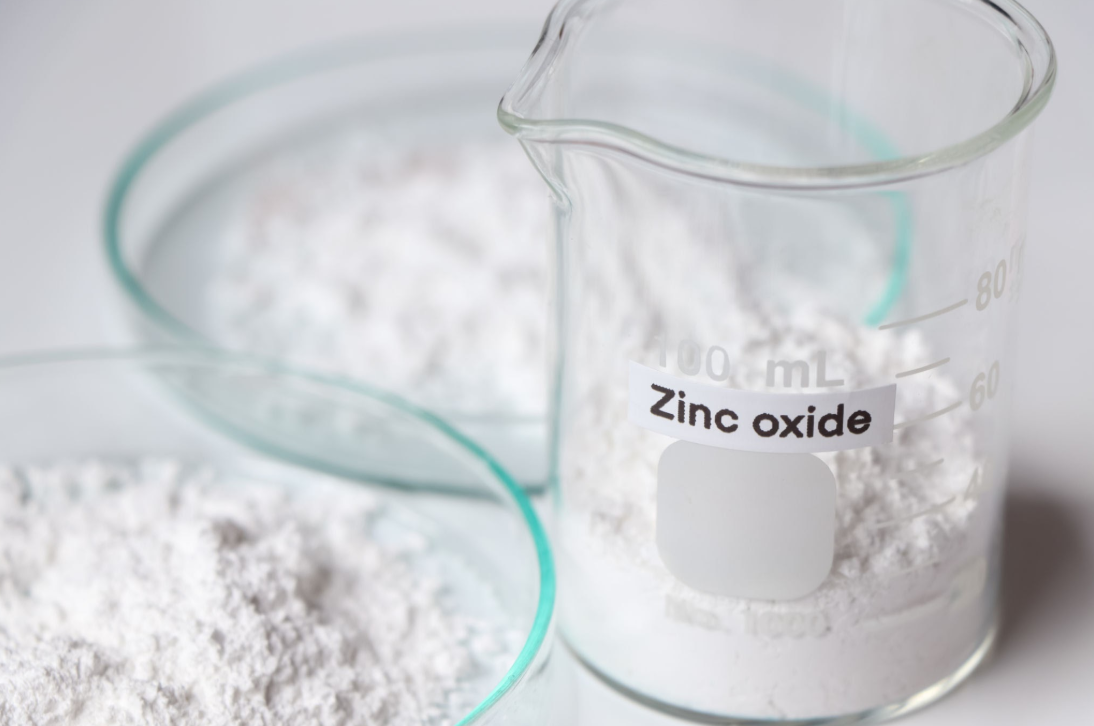
Zinc oxide (chemical formula: ZnO, CAS No.: 1314-13-2) is a key inorganic compound widely used across rubber vulcanization, ceramics and glass, coatings and plastics, cosmetics, sunscreens, and electronics/semiconductors. To help industrial clients and trade partners accurately grasp key specifications and application standards for zinc oxide, we have compiled the following FAQ guide:
Q1: What are the primary physical properties and chemical characteristics of zinc oxide?
A: At ambient conditions, zinc oxide presents as a white or slightly yellowish powder that is insoluble in water. It has a density of approximately 5.606 g/cm³ and a melting point of 1975 °C (sublimes at elevated temperatures) with a molecular weight of 81.38. As an amphoteric oxide, ZnO is insoluble in water and ethanol, but readily dissolves in acids, concentrated alkaline solutions, aqueous ammonia, and ammonium salt solutions.
Q2: What are the fundamental differences between Indirect Process (French Process) and Direct Process (American Process) zinc oxide?
A: The two processes differ significantly in production methods, purity levels, and primary applications:
Indirect Process (French Process): Utilizes refined zinc metal ingots (purity $\ge 99.97\%$) as raw material, which are vaporized at high temperatures and reacted with air. The resulting product features high purity (ZnO content typically $\ge 99.5\% - 99.7\%$) and extremely low heavy metal impurities (such as lead and cadmium). It is widely used in high-grade rubber products, varistors, pharmaceuticals, and cosmetics.
Direct Process (American Process): Uses zinc ores or zinc-bearing secondary materials mixed with carbonaceous reducing agents, which are sintered, vaporized, and oxidized. The final product has a lower purity (ZnO content generally ranges between $95\% - 99\%$) at a lower cost, making it suitable for standard rubber, ceramic glazes, and cable jacketing.
Q3: What role does zinc oxide play in the rubber industry, and why is the recommended dosage typically 3–5 phr?
A: Zinc oxide serves as the primary vulcanization activator in the rubber industry (while also functioning as a reinforcing agent and white pigment). During vulcanization, ZnO reacts with stearic acid to form zinc stearate, greatly enhancing accelerator activity, increasing cross-linking density, and accelerating cure rates. This improves the wear resistance, tear strength, and aging resistance of rubber products. In standard rubber formulations, the baseline dosage is typically 3–5 phr (Parts per Hundred Rubber).
Q4: What specific advantages does Nano-Zinc Oxide (Nano-ZnO) offer compared to conventional zinc oxide?
A: Nano-zinc oxide typically has a particle size ranging between 1–100 nm, exhibiting distinct quantum size effects and a large specific surface area:
Sunscreens & Cosmetics: It effectively blocks both UVA (320–400 nm) and UVB (290–320 nm) ultraviolet radiation while remaining highly transparent on the skin without leaving a white cast, making it a key active ingredient in physical sunscreen formulations.
Antibacterial & Catalysis: Under light irradiation, it generates reactive oxygen species (ROS), demonstrating photocatalytic degradation and broad-spectrum antibacterial properties.
Reduced Dosage: Due to its high reactivity, nano-ZnO can reduce actual usage by 30%–50% in rubber or coating formulations, helping lower environmental heavy metal load.
Q5: What are the safety and environmental compliance standards for zinc oxide storage and handling?
A: Although zinc oxide itself is non-flammable and has low oral toxicity, the following handling standards must be observed:
Moisture Protection & Sealing: ZnO readily absorbs atmospheric moisture and carbon dioxide to form basic zinc carbonate. It must be stored sealed in a cool, dry, well-ventilated warehouse.
Environmental Safety: Zinc oxide is hazardous to aquatic environments. Industrial handling and waste disposal must prevent dust dispersion and avoid direct discharge of wastewater into natural water bodies.
Occupational Protection: Inhaling high concentrations of zinc oxide dust or metal fumes generated at elevated temperatures can cause metal fume fever. Operators should wear dust masks and protective safety goggles.
Q6: What key parameters should be evaluated when procuring industrial-grade zinc oxide?
A: Buyers should verify the following core parameters listed on the supplier's Certificate of Analysis (COA):
Assay (ZnO Purity): In accordance with industry standards, premium Indirect Process zinc oxide should maintain a purity of $\ge 99.7\%$.
Sieve Residue (Particle Size): The 45 μm (325 mesh) wet sieve residue is typically required to be $\le 0.1\% - 0.02\%$. Lower residue levels minimize particle defects during processing.
Heavy Metal Limits: Pay close attention to lead (Pb), cadmium (Cd), and mercury (Hg) limits. For exports to the EU or applications in medical/food-contact products, full compliance with RoHS and REACH regulations is required.

Mobile version


HOME | ABOUT US | PRODUCTS | NEWS | HONORS | FACTORY | CONTACT | 中文版
Copyright(C)2025, Wuxi High Mountain Hi-tech Development Co., Ltd. All Rights Reserved. Supported by Sunsirs ChemNet Toocle Copyright Notice 备案序号:苏ICP备2025195488号