NEWS
High mountain
Is Oxalic Acid a Dangerous Good? Industrial Grade Specs, Applications and Export Compliance
Time: 2026-11-16
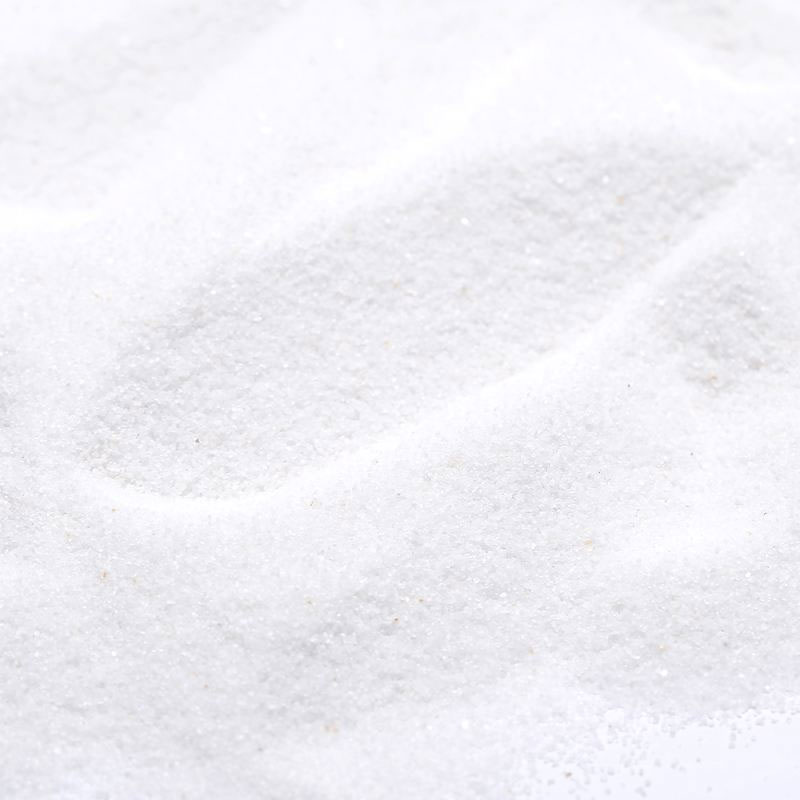
Oxalic acid is not classified as a dangerous good. Under China's Catalogue of Hazardous Chemicals (2015 edition) and its implementation guidance, oxalic acid (ethanedioic acid, H₂C₂O₄, CAS No. 144-62-7) is not listed and is therefore not regulated as a hazardous chemical. Export declarations and standard ocean freight are handled as ordinary chemical cargo.
That does not mean it is harmless. Oxalic acid carries a GHS classification of Skin Corrosion/Irritation Category 1B and Serious Eye Damage/Eye Irritation Category 1. Its dust and concentrated solutions irritate skin, eyes and mucous membranes, and ingestion binds calcium in the body to form insoluble calcium oxalate. The accurate statement is therefore: not a hazardous chemical, but a corrosive substance that must be handled as such.
This distinction — "classified" versus "corrosive" — is where international buyers most often get confused. The following guide, drawn from our experience in chlor-alkali and fine chemical exports, sets out specifications, applications and compliance points in practical terms.
Industrial oxalic acid in China is governed by GB/T 1626-2008 (Oxalic Acid for Industrial Use), which defines three grades. Knowing the grade matters more than fixating on the "99.6%" figure.
|
Grade |
Oxalic acid content |
Sulphate (as SO₄) |
Ignition residue |
Heavy metals (as Pb) |
Typical use |
|
Superior |
≥99.6% |
≤0.07% |
≤0.01% |
≤0.0005% |
Pharma intermediates, rare earth separation, electronic precursors |
|
First |
≥99.0% |
≤0.10% |
≤0.08% |
≤0.001% |
Textile reduction, metal treatment, leather |
|
Qualified |
≥96.0% |
≤0.20% |
≤0.20% |
≤0.02% |
Marble polishing, general rust removal, water treatment |
The selection logic is straightforward: impurity-sensitive processes (pharma, rare earth, electronics) need the superior grade; cost-driven processes that only require reducing or chelating function (polishing, rust removal, dyeing) are well served by the qualified grade. Buying the superior grade purely for rust removal is one of the most common cost leaks in procurement.
In short, the dihydrate is the workhorse and the anhydrous form is a specialty input. Most dyeing, derusting and polishing operations need only the dihydrate.
1. Rare earth precipitation and separation. Oxalic acid forms insoluble rare earth oxalates that are calcined to rare earth oxides — a key precipitation step in separation and refining. Demand tracks rare earth mining and processing quotas closely.
2. Pharmaceutical and fine chemical intermediates. Used in the synthesis and acidification steps for tetracycline, oxytetracycline, phenobarbital and borneol, where heavy metals and ignition residue limits are tight.
3. Metal cleaning and rust removal. Oxalic acid reacts with iron oxide to form soluble iron oxalate complexes and can leave an iron oxalate conversion layer that improves paint adhesion. Compared with hydrochloric acid pickling, it carries lower risk of over-pickling, generates no acid mist and avoids hydrogen embrittlement — suitable for precision parts, moulds and pre-paint treatment.
4. Textile dyeing, printing and leather. Acts as a reducing agent, bleaching assistant and pH adjuster, partially replacing acetic acid as a dyeing auxiliary; also used for deliming and chelation in leather processing.
5. New energy: lithium iron phosphate precursor route. The iron oxalate route to high-compaction LFP cathode material has become a significant growth driver, and oxalic acid is also used in leaching and metal-ion precipitation during spent lithium battery recycling.
Additional mature uses include electronic-grade cleaning and electronic ceramic raw materials, marble polishing, wood bleaching and water treatment.
1. Specify the grade and the basis — not just "99.6%". Your contract and COA should state the standard (GB/T 1626-2008), the grade, whether the assay is wet or dry basis, and the key impurity limits. A vague "99.6% min" is a reliable source of arrival disputes.
2. Packing and moisture control. Standard export packing is 25 kg PP woven or paper-plastic composite bags with PE liners; 1,000 kg jumbo bags are available for full containers. Oxalic acid cakes readily, so liner integrity and pallet shrink-wrapping determine arrival condition. A 20GP typically loads 25 MT.
3. Get the transport position right. Oxalic acid is not listed in China's hazardous chemicals catalogue and is generally carried as non-dangerous cargo; however, its corrosivity classification is real, and some carriers and destination ports will still require an MSDS and corrosive-goods handling conditions. The safe approach: ship with a GB/T 16483-compliant MSDS and confirm carrier requirements with your forwarder before booking, so declaration mismatches do not turn into demurrage at destination.
4. Storage. A cool, dry, well-ventilated warehouse; keep away from alkalis, strong oxidizers, food and feed; protect from rain and moisture; keep away from ignition sources. Shelf life under proper storage is typically 24 months — noticeably longer than most reducing agents, which is why oxalic acid is comparatively simple to handle in long-haul trade.
5. Supplier selection. Oxalic acid is a commodity whose price swings with rare earth and lithium battery demand and with the pace of export customs clearance. Public filings from a leading Chinese producer show average selling prices up more than 30% year on year in H1 2026. Supply reliability and batch consistency deserve more weight than a single quote.
Q1: Can oxalic acid replace hydrochloric acid for rust removal? Partly. Oxalic acid is gentler on the substrate, generates no acid mist and suits precision parts and pre-paint treatment. It reacts more slowly and costs more per unit, so heavy rust and high-volume carbon steel parts are still typically treated with hydrochloric or phosphoric acid. Choose based on part precision and downstream coating requirements.
Q2: Does oxalic acid export require dangerous goods packaging? It is not listed in China's hazardous chemicals catalogue, so UN-certified dangerous goods packaging is generally not required. An MSDS is still needed, and destination-country requirements (e.g. EU REACH registration) apply. Confirm with your carrier and importer.
Q3: Can caked oxalic acid still be used? Light caking from moisture absorption is common — test assay and impurities, and if in specification the material can be used with careful dissolution. Severe deliquescence, hardened lumps or colour change warrant retesting before use.
Q4: What is the HS code for oxalic acid? Oxalic acid, its salts and esters fall under HS 2917.11; the Chinese 10-digit export code is 29171110.00. Declare consistently with the actual product form and content.
Q5: Can food-grade and industrial-grade oxalic acid be interchanged? No. Food additive applications must use product meeting food additive standards; industrial grade does not meet food-contact limits for heavy metals and must not enter food processing.
Oxalic acid's compliance position in one line: not a hazardous chemical, but a corrosive substance; not declared as dangerous goods, but managed as a corrosive. Three things decide procurement outcomes — stating grade and assay basis precisely, matching grade to application to avoid paying for purity you do not need, and aligning the transport position with your forwarder before booking.
Wuxi High Mountain Hi-Tech Development Co., Ltd. is rooted in the former Wuxi Chemical Group system and has specialized in chlor-alkali chemistry since 1992. We supply monochloroacetic acid (MCAA), Rongalite (sodium formaldehyde sulfoxylate), sodium chloroacetate, paradichlorobenzene and zinc oxide to customers worldwide, supported by chemical trading and export services. If you are looking for a dependable China supply channel, contact us through our website to discuss specifications, packing and shipment schedules.

Mobile version


HOME | ABOUT US | PRODUCTS | NEWS | HONORS | FACTORY | CONTACT | 中文版
Copyright(C)2025, Wuxi High Mountain Hi-tech Development Co., Ltd. All Rights Reserved. Supported by Sunsirs ChemNet Toocle Copyright Notice 备案序号:苏ICP备2025195488号