
Capacity Ranks First Globally: China’s Ethylene Industry Enters a New Stage of "Structural Optimization"
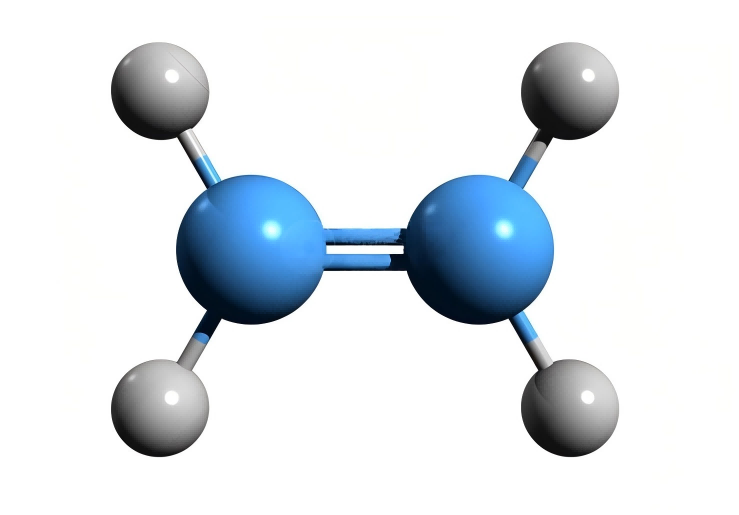
In recent years, China's ethylene industry has experienced rapid development, with multiple large-scale integrated refining-petrochemical complexes and differentiated cracking units successfully built and commissioned. As the core feedstock of the petrochemical industry, the technological upgrading and capacity expansion of the ethylene value chain have laid a solid foundation for the localization of high-end chemical materials. Amid a massive capacity base and ongoing scale expansion, industry discussions regarding domestic supply and demand dynamics have drawn increasing attention.
I. Overview of Global and Domestic Supply and Demand
According to industry statistical data, by the end of 2025, China's nominal total ethylene capacity reached 62 to 63 million tons per year, accounting for 27% to 28% of the global total capacity (approximately 225 to 230 million tons per year). With several major facilities progressing as planned, domestic capacity is expected to exceed 70 million tons per year in 2026.
On the consumption side, China remains one of the largest consumer markets for ethylene globally. By the end of 2025, domestic ethylene equivalent apparent consumption stood in the range of 67 to 69 million tons per year, absorbing nearly one-third of global ethylene and downstream derivatives.
In statistical practice, the industry strictly distinguishes between two metrics:
-
Ethylene Monomer: Refers to ethylene gas itself. Due to transportation and storage constraints, domestic cracking units are almost entirely paired with downstream units. As a result, direct monomer imports remain at low levels, with the monomer self-sufficiency rate reaching 97% to 98%.
-
Ethylene Equivalent: Converts downstream derivatives like polyethylene and ethylene glycol back to ethylene based on raw material consumption. In 2018, China's equivalent self-sufficiency rate was only around 50%. Following waves of integrated project commissioning, the comprehensive equivalent self-sufficiency rate rose to between 78% and 82% by the end of 2025, significantly reducing reliance on external supplies.
II. Multi-Tiered Supply Structure and Feedstock Pathways
Domestic ethylene production has formed a multi-tiered supply pattern comprising state-owned enterprises, private refining-petrochemical integrated producers, and specialized chemical companies:
-
State-Owned Enterprises: Led by major national oil and petrochemical corporations, these producers maintain over half of domestic capacity. Relying on megaton-scale manufacturing bases in Zhenhai, Dushanzi, Maoming, and Jilin, their footprint covers coastal, northwestern, and southwestern regions.
-
Private Refining Integrated Enterprises: Companies such as Zhejiang Petrochemical, Hengli Petrochemical, and Shenghong Petrochemical rely on large-scale refining-petrochemical integration. They build large ethylene crackers directly linked to crude oil refining and polyolefin chains, serving as a key driver of recent capacity expansion.
-
Differentiated Pathway Producers: Companies such as Wanhua Chemical focus on high-end polyolefins like POE; Satellite Chemical prioritizes the ethane cracking route; and Baofeng Energy utilizes coal-to-olefins (CTO) technology to supplement domestic supply and diversify feedstock pathways.
Overall, naphtha cracking remains the primary production route in China, while coal-to-olefins and ethane cracking continue to develop as complementary pathways.
III. Export Positioning and Market Realities
Data indicates that domestic ethylene equivalent exports have long maintained a low ratio of 3% to 5% relative to total domestic production. The primary driver behind domestic capacity growth is satisfying local market demand and advancing import substitution, rather than exporting capacity overseas. When domestic demand fluctuates or inventory pressures rise, producers adjust downstream derivative exports to balance inventories.
Regarding the discussion around potential overcapacity, industry analysts suggest that the domestic ethylene sector cannot be defined simply as experiencing comprehensive overcapacity. Instead, it exhibits clear structural supply and demand characteristics:
-
No Overcapacity in Monomer: Ethylene gas cannot be transported easily over long distances. Cracking units are directly tied to downstream processing facilities, preventing excessive surplus monomer from flooding the market.
-
Phase-Specific Competition in Commodity Polyolefins: In commodity polyolefin grades, capacity addition rates have temporarily outpaced equivalent consumption growth, leading to heightened market competition and margin pressure.
-
Supply Deficits in High-End Materials: In high-barrier segments such as POE (polyolefin elastomers), metallocene polyethylene, and high-end EVA, domestic supply limitations persist, leaving room for continued import reliance.
IV. Industry Outlook
Looking forward, the expansion focus of China's ethylene industry will gradually shift from sheer capacity growth to value-chain extension and product structure upgrades. As the industry accelerates research and development in high-end polyolefins and advanced materials, the self-reliance of critical chemical materials will be further strengthened, driving sustainable, high-value growth across the domestic petrochemical industry.