
Thiourea (CH4N2S): Physicochemical Properties, Production Processes, and Safety Applications
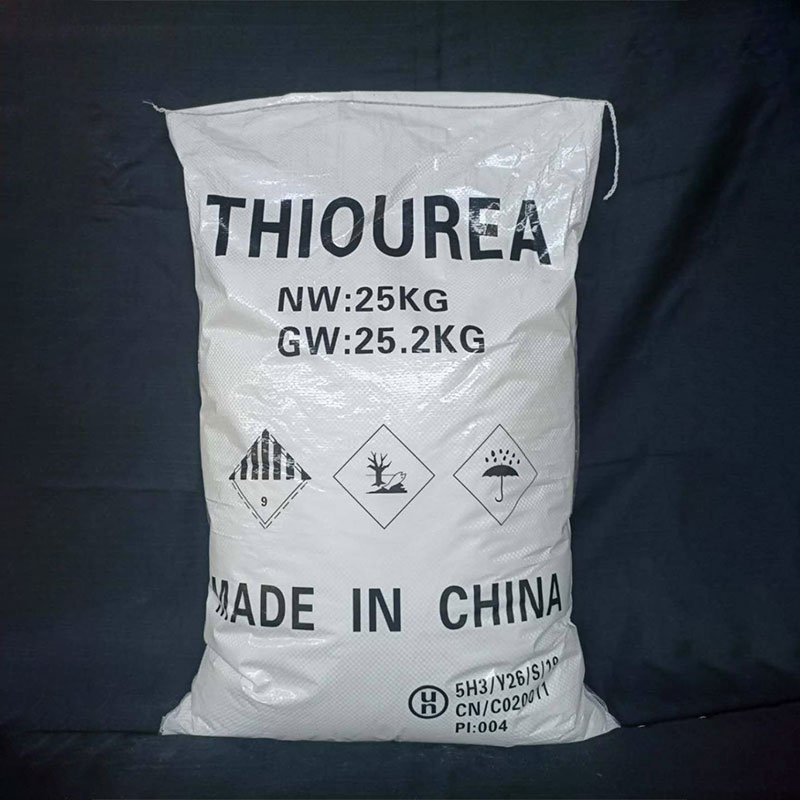
Thiourea is an organosulfur compound represented by the chemical formula CH4N2S (or (NH2)2CS). It presents as a white crystalline solid. Known for its strong reducing action, complexing capability, and distinct chemical reactivity, thiourea plays an important role across pharmaceutical intermediate synthesis, agrochemical manufacturing, mineral processing, textile dyeing, and metal electroplating/gilding.
To help industrial users and trade partners better understand its physicochemical properties, production methods, quality standards, and operational safety, here is a structured FAQ guide:
Frequently Asked Questions (FAQ)
Q1: What are the fundamental physicochemical parameters of thiourea? How does it perform regarding solubility and thermal stability?
A:
-
Basic Information: CAS No. 62-56-6, Molecular Weight: 76.12, Relative Density: 1.405, Melting Point Range: 176–178 ℃.
-
Physical Appearance & Taste: At ambient conditions, it presents as a white, odorless or slightly odorous crystalline powder with a bitter taste.
-
Solubility: Readily soluble in water, with solubility increasing markedly at higher temperatures; soluble in ethanol and methanol, slightly soluble in ether.
-
Thermal Stability: When heated near its melting point, thiourea undergoes isomerization to transform partially into ammonium thiocyanate. Further decomposition at elevated temperatures releases sulfur oxides and nitrogen oxides; hence, processing and storage temperatures must be controlled.
Q2: What is the primary industrial production process for thiourea?
A: Industrial preparation of thiourea relies primarily on the reaction between calcium cyanamide (lime nitrogen) and hydrogen sulfide:
-
Process Flow: Calcium cyanamide (CaCN2) is mixed with water to form a slurry, into which hydrogen sulfide (H2S) gas is passed to perform sulfidization, forming calcium hydrosulfide and cyanamide solutions. Subsequent addition reactions under alkaline conditions yield a thiourea solution.
-
Purification & Solidification: The reaction liquid undergoes desulfurization, filtration to remove impurities, and subsequent evaporation, crystallization, separation, and drying to produce industrial-grade thiourea.
-
Process Features: This route is mature, uses accessible raw materials, and suits continuous large-scale manufacturing. Repeated recrystallization can further elevate product purity to meet pharmaceutical or electronic grade requirements.
Q3: What are the primary industrial applications of thiourea?
A: As an organic synthetic raw material and industrial auxiliary, thiourea serves key functions across multiple sectors:
-
Pharmaceutical & Agrochemical Intermediates: Used to synthesize sulfonamides, antithyroid medications (e.g., methimazole, propylthiouracil), and heterocyclic agrochemicals (such as thiazole insecticides and fungicides).
-
Gold & Precious Metal Extraction: Functions as an environmentally friendly leaching agent (thiourea leaching process) in metallurgy, replacing toxic cyanides for gold extraction from refractory ores containing sulfur or arsenic.
-
Textile & Dyeing Auxiliaries: Serves as a bleaching auxiliary, anti-shrinkage agent, and intermediate for vat dye synthesis.
-
Electroplating & Surface Treatment: Used as a chemical polishing and complexing agent in copper plating, tin plating, and electroless gold plating, enhancing coating smoothness and brightness.
-
Resins & Polymers: Functions as a curing accelerator for epoxy resins, a rubber vulcanization accelerator, and a raw material for flame-retardant resin synthesis.
Q4: What quality indicators and testing standards apply to thiourea?
A: According to industrial thiourea standards (such as GB/T 1615-2021 and equivalent international specifications), quality requirements include:
-
Assay: On a dry basis, the main assay content (CH4N2S) for industrial-grade thiourea is typically required to be 99.0% or higher.
-
Key Quality Parameters:
-
Melting Point: Premium grade requires a melting point of 171.0–177.0 ℃ or higher to confirm crystalline purity.
-
Loss on Drying (Moisture): Controlled at ≤ 0.40%.
-
Ash & Water-Insoluble Matter: Ash content is kept below 0.10%, and water-insoluble matter below 0.02% to ensure solution clarity.
-
Thiocyanates & Water-Soluble Heavy Metals: Strict limits apply to thiocyanate residues (as SCN-) and heavy metal impurities such as lead and iron.
-
-
Assay Method: Silver nitrate titration or High-Performance Liquid Chromatography (HPLC) is used to determine main assay content.
Q5: What are the safety handling and environmental requirements for thiourea?
A: Thiourea is classified as a toxic substance and environmental hazard under dangerous goods codes (UN No. 2811).
-
Protective Equipment: Personnel handling thiourea dust must wear dust masks, protective goggles, chemical-resistant gloves, and protective clothing to avoid inhalation or skin and eye contact.
-
Storage & Transport: Store in a cool, dry, well-ventilated warehouse away from fire and heat sources. Keep separated from strong oxidizers, strong acids, and food additives. Ensure packaging remains sealed and protected from moisture and damage.
-
Waste & Environmental Handling: Thiourea exhibits toxicity to aquatic life. Production and washing wastewater must be neutralized and treated in effluent facilities before discharge; direct release into natural water bodies is prohibited.